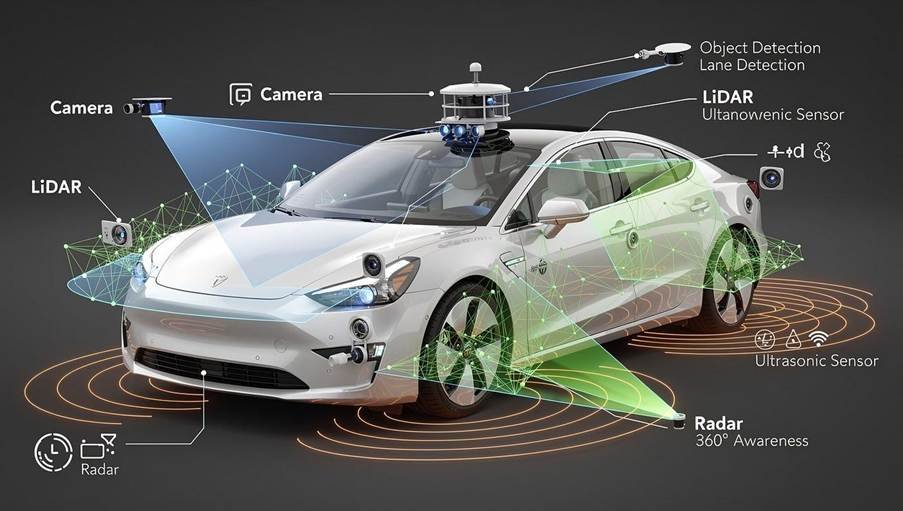
Modern automobiles are able to evaluate numerous data points instantly, which has increased the dependency on software systems found in engines, batteries and machinery. Information is retrieved from many sources like cameras, radars, lidars, GPS, microphones, and wheel-speed sensors and analyzed with the help of electronic control units and high-performance processing systems to make real-time decisions regarding driving. This is the technology responsible for the emergence of software-managed cars, which can be updated and improved and new features added during the cars’ 10–15-year lifespan. According to research conducted by Dataintelo, the global automotive software sector is expected to grow from $32.8 billion in 2025 to $78.62 billion in 2034. This represents a compound annual growth rate (CAGR) of 10.2% and an increase of $45.82 billion overall.
This rise indicates the increase in the role of software in vehicle intelligence, communication, safety, energy management, and digital services. As computer architectures become more centralized, automotive software is rapidly emerging as the layer that connects sensors, processors, electronic control units, and cloud platforms into a single digital vehicle universe.
From Mechanical Machines to Software Platforms

Until recently, in conventional vehicles, the various tasks of the vehicle were allocated to a large number of electronic control units, but now the new architectures unify computing by using domain or zonal controllers instead. For instance, cars equipped with, say, 70 electronic units of control could greatly reduce the number of units due to centralized computing. It is important to acknowledge that automotive Ethernet brings about an innovation in information transmission that has proven to be totalling 1 Gbps against the previous generation’s CAN communication of 1 Mbps. The distinction between the two technologies lies in the fact that automotive Ethernet provides one thousand times more raw bandwidth compared to traditional CAN alternatives. As a result of this, it becomes possible to employ streams coming from cameras, merge the data received from sensors, and perform in-the-moment decision-making.
Also Read: AI Smart Cities Design Construction Software for Buildable Urban Projects
AI Is Becoming the Vehicle’s Decision Layer
With the advancement of various functions, artificial intelligence is gradually transitioning from the experimental stage to the real stage of assisted driving. For instance, a car must have at least six cameras that take information from sensors and radars to measure the presence of such objects as cars, bikes, pedestrians, lanes, and obstacles. Machine learning algorithms process the information about the objects in milliseconds, while sensor systems use data from many sensors to take actions. Based on the report by NHTSA, driver-assistance technologies can help to reduce accidents and save many lives since there were more than 39,300 people killed in road accidents in the U.S. in 2024 alone.
As a result, the program has an impact on safety in various ways. For example, the automatic emergency brake system can warn the driver about possible accidents, while lane-keeping control systems assist in steering. Besides, driver assistance technologies gather information which can be utilized for more research and introduction of road safety techniques.
Over-the-Air Updates Turn Cars Into Updatable Devices
Smartphones accumulate various software upgrades during their lifetime and cars too are following this trend. The automotive operating system includes millions of codes collected in systems related to infotainment, engines, batteries, communications, and safety. The updates sent via the air help repair mistakes in the software and optimize algorithms, as well as add certain features without the need of being delivered to the workshop. The car sold in the first year can get significant upgrades in its software at the age of 3, 5, or 8 years, as long as the hardware is still compatible.
Cloud Connectivity Creates a Continuous Data Loop
Connected vehicles have changed the concept of an automobile. Now, it may be considered much more than a vehicle because it has become a network node. Telematic systems have become capable of delivering information about location, diagnostics, battery status, energy consumption, driving patterns, etc. A fleet with 10,000 connected vehicles may create millions of data entries every day. The U.S. Department of Energy mentions that connected and intelligent transportation technologies require a lot of computing capacities, analytical software, and connectivity for communication between vehicles and people, as well as infrastructures.
There are several essential functions:
- Predictive diagnostic tools can detect incorrect sensor readings prior to arrival of the failure.
- Vehicle information can also be analyzed in the cloud.
- APIs are able to provide vehicle data with navigation, charging, fleet, and mobility applications.
- Digital Twins can emulate behavior of vehicles.
| Automotive Software Layer | Key Metric | Main Role |
| ADAS and AI | ms response | Automotive Safety and Object Detection |
| OTA Updates | 1–8+ years | Software improvements after delivery |
| Cloud & Telematics | 10,000+ vehicles | Fleet and predictive analytics |
| EV Software | 100 kWh battery example | Energy and charging management |
| Cybersecurity | 6+ connectivity pathways | Vehicle and data protection |
EVs Make Software Even More Important
Electric vehicles require added software and controls as energy needs to be precisely monitored in the battery, inverter, motor and charging components. The battery management system is responsible for overseeing battery voltage, temperature and charge, while the power control software also looks after acceleration and regenerative braking. In a battery pack that holds 100 kWh of usable power, being able to better manage 5 % of this energy represents an extra 5 kWh. The Department of Energy points out that simulations, modeling, and software can help make electric drive more efficient.
Cybersecurity Becomes Part of Vehicle Engineering

Additional Automotive software provides more digital accessibility options for cars. Connected vehicles usually use cellular communications, Wi-Fi, Bluetooth, USB connections, cloud services, and applications for their multi-channel connectivity which is typically around six channels. When hackers penetrate the software causing issues like compromised privacy, disrupted diagnostics, and malfunctioning vehicles, cybersecurity needs to be tackled in the initial stages of the vehicles’ design rather than when consequences start to show. Security measures, such as secure booting, encryption, intrusion detection, authentication, and software upgrades are effective ways of ensuring cybersecurity. Additionally, the manufacturer should manage the vulnerabilities associated with the vehicle throughout its lifetime of 10–15 years based on information lost.
The Rise of Vehicle Operating Systems
The next important change in software is the launch of centralized vehicle operating systems. Now that infotainment, connectivity, ADAS, and vehicle controls can be integrated, the need emerges for software platforms to provide unified service providing features like computing, communications, security, and management of data. In this case, the concept can be compared to that of smartphones, where the device’s operating system serves the needs for hundreds of applications. However, automotive software has to meet more advanced requirements related to safety, stability, and response time.
What Intelligent Vehicles Will Deliver
It is important to understand that the worth of car software is greater than just self-driving. A connected automobile is able to benefit from a constant round-the-clock monitoring, personalized interfaces, predictive repairs and instant navigation which enhances the ownership experience. In fleet operations it is possible to check on the status of thousands of vehicles through one control panel, while electric cars owners have chances to analyze their battery functionality together with charging availability. Also, vehicle-to-everything solutions offer data exchange with the road infrastructure and other drivers thus widening up the digital transport network.
The Road Ahead
Automotive software is transforming vehicles from mere manufactured goods into dynamic platforms that evolve after delivery. Algorithms, AI technology, clouds, over-the-air updates, and cybersecurity are becoming parts of this platform. Hardware will still play an important role but will become the layer among many complicated hardware components. In the next 5-10 years, the most advanced cars will very likely be competing in areas other than power, distance traveled, and design, including computing performance, ability to upgrade, and intelligence of the information system.
FAQS
A software-defined vehicle is a car whose main features, settings, and functions are controlled and improved through software. Instead of relying only on fixed hardware, the vehicle can receive updates that change how systems work, add features, fix problems, or improve performance.
Over-the-air updates let automakers send software changes directly to a connected vehicle. These updates can fix bugs, improve infotainment, patch security issues, adjust driver-assistance behavior, or introduce new features without requiring a service-center visit.
Zonal controllers organize a vehicle’s electronics by physical area, such as front, rear, or side zones, and connect local sensors and devices to central computers. This reduces wiring complexity, improves data flow, and makes it easier to manage software across the vehicle.
A traditional car is mainly a mechanical product with fixed electronic functions. An intelligent digital platform is a connected vehicle that uses software, sensors, cloud services, and AI to adapt over time, support new features, and deliver a more personalized driving experience.
Yes. Software can optimize battery use, manage charging schedules, reduce energy waste, and adjust climate-control or driving settings based on conditions. These improvements can help electric vehicles use energy more efficiently without changing the physical battery.
Vehicle middleware is the software layer that connects applications, operating systems, sensors, and vehicle hardware. It helps different systems communicate consistently, which makes it easier for automakers to add or update features without rebuilding every part of the vehicle.
Automakers typically test vehicle software through simulations, virtual test environments, hardware-in-the-loop testing, controlled road testing, and staged rollouts. This helps identify safety, performance, and compatibility problems before an update reaches a large fleet.


