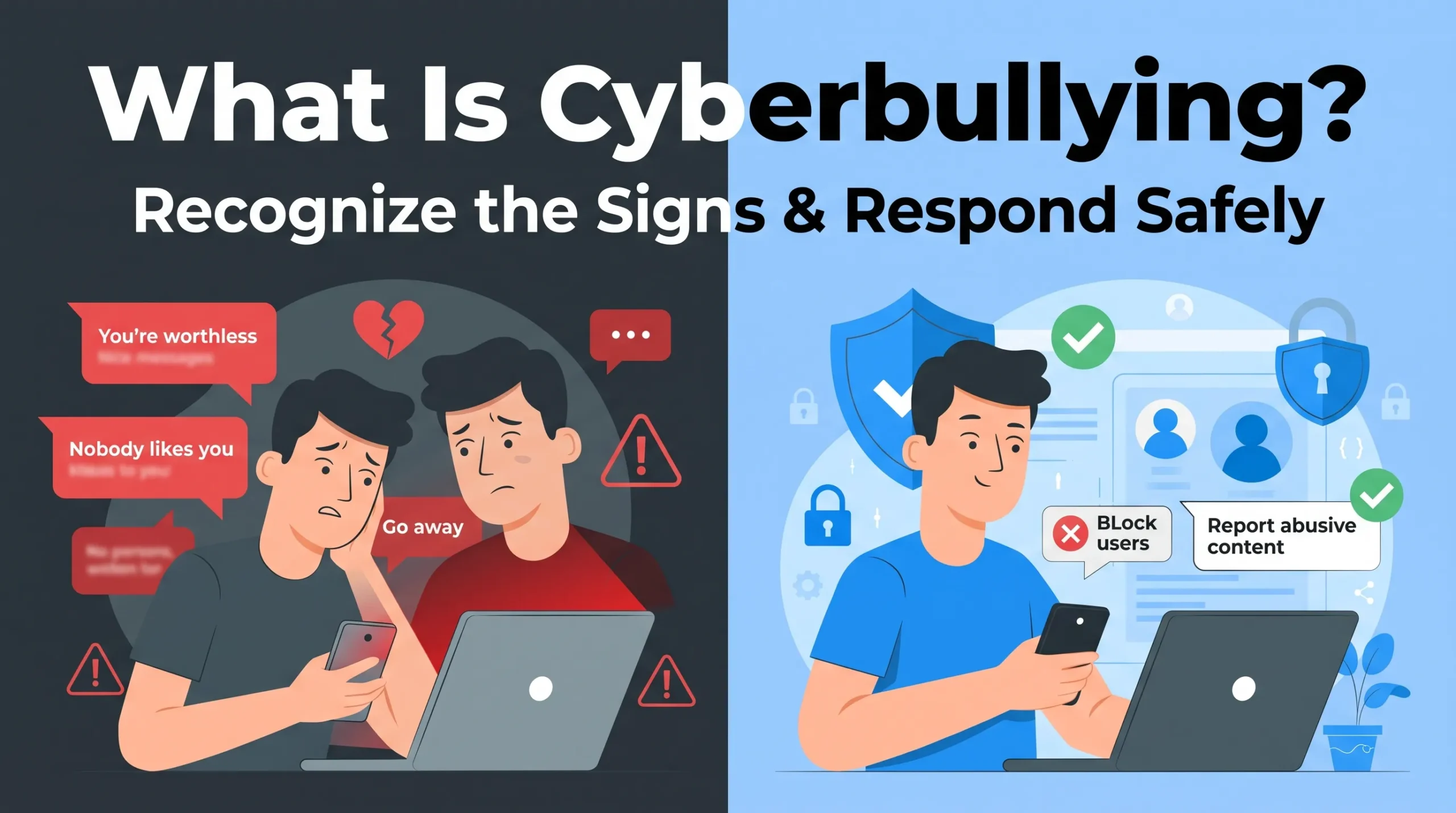
Harassment no longer ends when someone leaves school, work, or a social setting. A cruel text, humiliating photo, fake account, or hostile group chat can follow a person into their home and reach them at any hour. So, what is cyberbullying? It is harmful behavior carried out through phones, computers, apps, gaming platforms, social media, or other digital services. Understanding the cyberbullying definition helps children, teens, parents, teachers, employers, and online communities spot harm early and respond safely.
The guide below explains examples of cyberbullying, its effects, warning signs, and how to stop cyberbullying from spreading.
Cyberbullying Is Repeated Harm Delivered Through Digital Technology
What Is Cyberbullying? A Clear Definition
Cyberbullying involves sending, posting, sharing, or creating harmful content about another person through digital technology. The conduct may be repeated, or one post may be shared so widely that it causes continuing harm. The StopBullying.gov definition of cyberbullying includes harmful, false, mean, or private content shared through phones, apps, social media, forums, email, and online games.
It may happen through comments, direct messages, texts, group chats, livestreams, gaming services, websites, image-sharing tools, or video platforms. Laws and school or workplace rules differ by location. They may use different standards for intent, repetition, age, threats, and civil or criminal liability.
How Cyberbullying Differs From Traditional Bullying
Both online and face-to-face bullying can involve intimidation, humiliation, exclusion, fear, and a power imbalance. The digital setting adds several risks. Harmful material can reach a large audience within minutes, stay searchable, or resurface long after the first post.
A person may also hide behind an anonymous or fake account. Targets can be contacted at home, during the night, or across several platforms. Digital records may preserve evidence, though posts and messages can also disappear quickly.
Cyberbullying Versus Online Conflict or a Hurtful Comment
Every unpleasant online exchange is not cyberbullying. A one-time disagreement, mutual argument, accidental offense, fair criticism, or content moderation decision may not meet that standard.
Trolling, stalking, hate speech, and harassment can overlap with cyberbullying but have different meanings. Safety, severity, power imbalance, and the pattern of conduct all matter. If someone asks another person to stop and the behavior continues, that pattern deserves attention even if the sender calls it a joke.
Common Forms of Cyberbullying Make Digital Spaces Unsafe
Public Humiliation and Harmful Content
Public cyberbullying aims to shame someone or damage their reputation. Examples include posting private photos without permission, sharing confidential messages, spreading rumors in a group chat, creating cruel memes, or adding abusive comments to a public post.
A person who reposts, likes, forwards, or encourages the material can increase its reach. The original poster may not be the only person causing harm.
Exclusion, Impersonation, and Deception
Digital exclusion can isolate a target by removing them from group chats, gaming teams, shared projects, or online communities while others mock them. Impersonation may involve creating a fake profile, using someone’s photo, or sending offensive messages in that person’s name.
Another tactic is tricking someone into sharing private information and then distributing it. These actions can damage friendships, school standing, work relationships, and personal safety.
Threats, Harassment, and Coordinated Attacks
More serious examples include repeated threats, doxxing, dogpiling, persistent contact across platforms, sexual harassment, non-consensual intimate images, and sextortion. A group may encourage others to flood one person with attacks or threats.
Threats of violence, stalking, private information exposure, or sexual exploitation need prompt action. Tell a trusted adult, school leader, employer, platform, or law enforcement agency, depending on the situation.
Cyberbullying Can Affect Mental Health, Safety, and Daily Life

Emotional and Psychological Effects
People respond differently based on the length and severity of the abuse, their support system, age, and personal circumstances. Possible reactions include anxiety, fear, sadness, anger, shame, helplessness, loss of confidence, and social withdrawal.
The CDC’s bullying guidance links bullying with emotional distress, sleep problems, anxiety, depression, lower academic achievement, and self-harm risk. These are possible outcomes, not diagnoses. A mental-health professional can assess ongoing distress.
Changes in School, Work, and Online Behavior
A child, teen, or adult may avoid school, work, hobbies, friends, or online spaces. Other signs include distress after notifications, sudden account deletions, multiple new accounts, secrecy around devices, falling grades, or weaker job performance.
Sleep and appetite may change. A person may report headaches or stomachaches without a clear cause. These signs do not prove cyberbullying, but they should prompt a calm check-in.
When Cyberbullying Becomes an Immediate Safety Concern
Direct threats, location tracking, doxxing, sexual blackmail, exploitation, or stalking can create immediate danger. References to self-harm or suicide also require urgent support, even when the person says they were joking.
Call emergency services if someone faces immediate physical danger. In the United States, the 988 Suicide & Crisis Lifeline offers free, confidential help by call, text, or chat. People elsewhere should contact their local crisis service or emergency number.
Recognizing Cyberbullying Requires Attention to Patterns and Context
Digital Warning Signs in Messages and Accounts
Look for repeated hostile messages, suspicious account activity, fake profiles, unauthorized photos, or private conversations shared without consent. Coordinated comments from several accounts may show a group attack.
Removal from an online group followed by mocking, threats, or rumor-spreading can also signal abuse. Save evidence before accounts or posts change.
Behavioral Signs in Children, Teens, and Adults
Someone experiencing cyberbullying may become reluctant to discuss online activity or show a sudden mood change after using a device. They may isolate themselves, avoid routine activities, sleep poorly, lose interest in hobbies, or report physical discomfort.
These behaviors are signals to begin a supportive conversation, not proof of what happened. Avoid blame and give the person time to explain.
Questions That Open a Supportive Conversation
Use calm questions such as, “Has anyone been treating you badly online?” Ask, “What happened, and where did it occur?” Other helpful questions include, “Who else may have seen it?” “Do you feel safe right now?” and “What kind of help would feel most useful?”
Do not blame the target or demand immediate access to every private conversation. Avoid posting an angry public reply before checking the facts and assessing safety.
A Calm, Documented Response Can Stop Cyberbullying From Escalating
Save Evidence Before Blocking or Deleting
Take screenshots that show usernames, dates, times, URLs, and enough surrounding content to explain what happened. Keep original texts, emails, images, and videos when possible. Write an incident log with dates, frequency, witnesses, and effects on school, work, sleep, or safety.
Do not redistribute abusive or intimate material. This is especially important when minors appear in the content. Store evidence securely and share it only with people who need it for support or reporting.
Use Platform Tools and Strengthen Account Security
Block or mute abusive accounts after saving evidence. Report posts, messages, accounts, or groups through the platform’s safety tools. Restrict comments, tags, mentions, direct messages, and location sharing.
Change passwords, turn on multifactor authentication, review recovery email addresses, and check connected devices. Blocking may reduce contact, but it is not enough by itself when threats, doxxing, stalking, or sexual exploitation occur.
Involve Trusted Adults, Schools, Employers, or Authorities
Tell a parent, caregiver, teacher, counselor, safeguarding lead, or school administrator. Workplace incidents may go to a manager, human resources team, or designated investigator. Ask about anti-bullying, harassment, safeguarding, and incident-reporting policies.
Contact law enforcement when threats, stalking, extortion, doxxing, or exploitation may have occurred. A qualified mental-health professional can help when distress continues or daily life changes. UNICEF’s cyberbullying response guidance also recommends seeking trusted support, collecting evidence, blocking, and reporting.
Prevention Works Best When Digital Respect Is Shared by Everyone

Build Safer Digital Habits
Use strong, unique passwords and multifactor authentication. Keep personal details private, review settings often, avoid sharing your location with strangers, and think before posting private conversations or images.
When a conversation turns hostile, leave instead of escalating. Keep records if unwanted contact begins. Privacy tools cannot prevent every attack, but they can reduce access and limit exposure.
Teach Bystanders to Interrupt Harm Safely
Witnesses should not like, repost, forward, or joke about humiliating content. They can privately support the target, report abusive material, preserve useful evidence, and ask others to stop participating.
Direct confrontation is not safe in every case, especially during threats or coordinated attacks. A trusted adult, school leader, employer, or platform may be better placed to act.
Create Clear Policies and Support Systems
Schools, families, employers, and online services need clear definitions, easy reporting paths, consistent consequences, and confidential support. Digital citizenship lessons should cover empathy, privacy, consent, conflict management, and media literacy.
Reporting should not end the response. Organizations need to check on the target, protect witnesses, review further incidents, and share current resources from groups such as UNICEF, StopBullying.gov, the Cyberbullying Research Center, and local agencies.
Conclusion
Cyberbullying is harmful digital behavior involving harassment, humiliation, exclusion, threats, impersonation, or the repeated spread of damaging content. A single disagreement may not qualify, but severe or continuing abuse deserves a serious response.
Watch for changes in messages, accounts, mood, relationships, school, work, sleep, and daily routines. Save evidence, report content, secure accounts, and involve trusted support. Threats, doxxing, stalking, sexual exploitation, and self-harm concerns require urgent escalation.
Recognizing cyberbullying early can reduce harm, protect evidence, and connect affected people with help. Take the first safe step: save what happened, tell someone you trust, and report conduct that puts a person at risk.
FAQS
Cyberbullying is harmful behavior done through digital devices like phones, computers, social media, messaging apps, or gaming platforms. It usually involves repeated, intentional actions meant to shame, threaten, or hurt someone online.
Common examples include sending insulting messages, spreading rumors, sharing private photos without permission, impersonating someone online, or posting humiliating content. It can also include ongoing harassment, exclusion, or threats across digital spaces.
Warning signs may include becoming secretive about devices, seeming upset after using the phone or internet, avoiding school or social activities, or showing sudden mood changes. A drop in sleep, appetite, or school performance can also be a clue.
Save the messages or screenshots, block the person, and report the behavior on the platform. If it feels serious or unsafe, tell a parent, teacher, counselor, or another trusted adult right away.
Yes, it can lead to stress, anxiety, sadness, fear, or withdrawal from friends and activities. The emotional impact can be stronger because online harassment can feel constant and harder to escape.


One Comment on “What Is Cyberbullying? Recognize the Signs and Respond Safely”
Comments are closed.